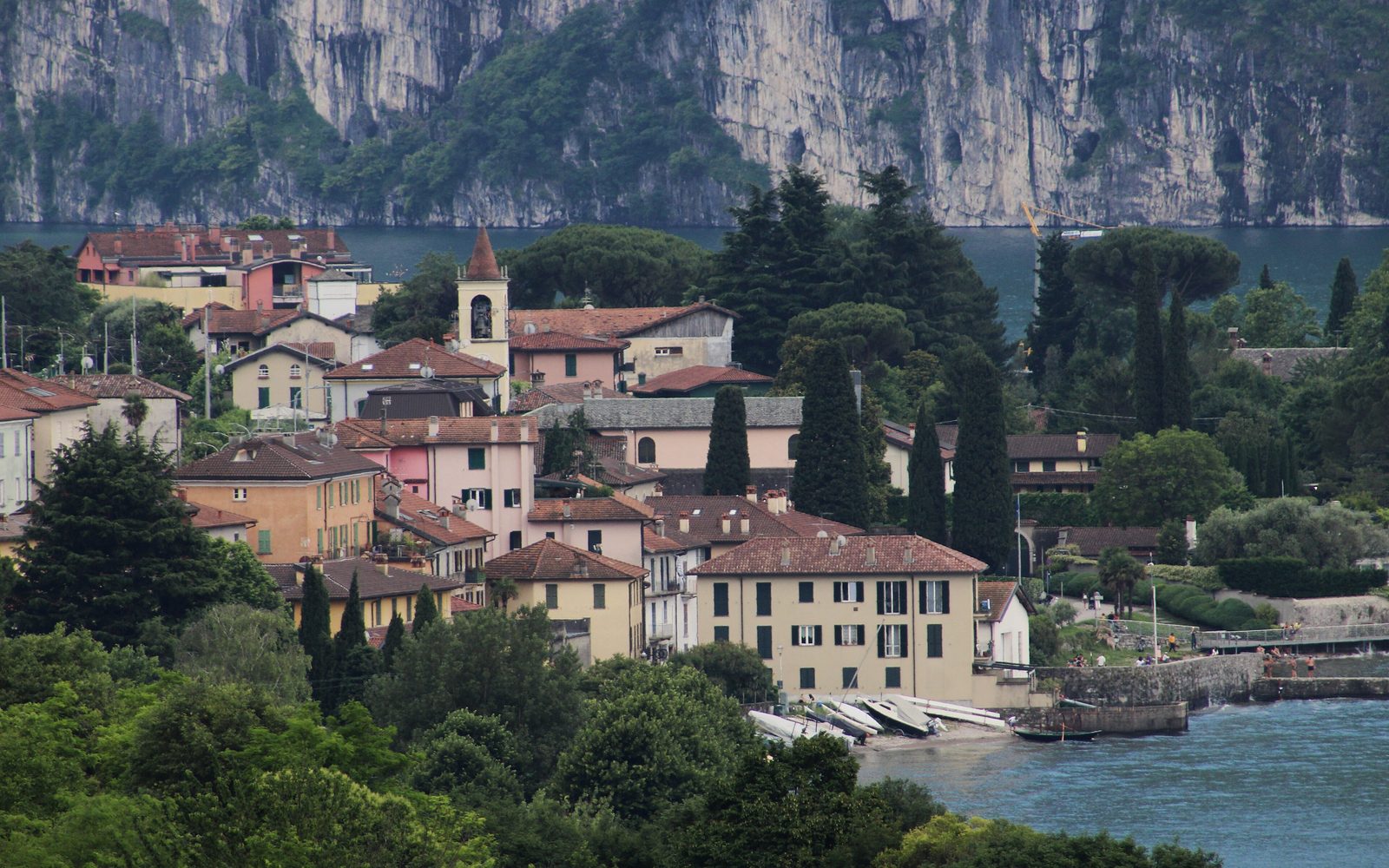
Linzanico is one of the «upper hamlets» of Abbadia Lariana: a village of Romanesque layout, with narrow alleys and courtyards, a former town hall with a stone wash house under its portico, and a little church of the Annunciation recorded as early as 1288. It was an independent municipality until 1928.
History
The tourism site of the Comune describes Linzanico as a settlement of Romanesque layout that in the modern era belonged to the Duchy of Milan. It became a municipality in the course of the 18th century and for some years was in the province of Como; in 1809 a decree of Napoleon annexed it to Mandello. When the Austrians returned the municipality was restored, with five settlements: Novegolo, Linzanico, Crebbio, Lombrino and Zana, which today make up the «upper hamlets». The final union with Abbadia Lariana came in 1928, by royal decree. Wikipedia’s article on the town also mentions the merger and reads the two stars of the municipal coat of arms as the two communities of Abbadia and Linzanico.
The sources differ on one point: Lombardia Beni Culturali, in its record of historical institutions, has the municipality of Linzanico start as early as the 14th century and lists its phases up to 1928, whereas the tourism site has it born in the 18th. The sources consulted do not explain the difference.
What to see
The former town hall. In piazza Giovanni XXIII, number 5, stands the building that housed the municipality, built around 1830-1840. The facade has three large round arches on the ground floor, two pilasters at the sides and a broken pediment above. Under the portico there is a stone wash house, which the record calls characteristic. Today the building is a multipurpose centre and is publicly owned, according to the Lombardia Beni Culturali record.
The church of the Annunciation. It appears in the records as early as 1288. The parish of Abbadia says it changed orientation after a natural disaster that seems to have destroyed the whole village: it was turned towards the Moiana, the area whose instability caused floods and disasters, so that the Madonna would protect the village from further harm. By 1500 it had its present orientation. Between 1600 and 1627 there were various works, and Bishop Carafino described it, in Latin, as an «elegant» oratory. The paintings it holds all come from the old church of San Lorenzo, the one that stood in the place now called Chiesa Rotta.
The alleys. The tourism site notes that some 18th-century buildings remain in Linzanico. The Pro Loco, describing the Anello a Lago, advises stopping to wander through the maze of alleys and courtyards.
On the route
In the 2012 description of the Anello a Lago the village comes after the hamlet of Novegolo: a short climb leads to Linzanico and its wash house. Just outside the village the path runs between the lake and the meadows. The full route is in the Anello a Lago itinerary. From the village also starts, according to the tourism site, the itinerary to the Cenghen waterfall.
Practical information
- The Linzanico wash house is under the portico of the former town hall, in piazza Giovanni XXIII (Lombardia Beni Culturali, OpenStreetMap); the route description speaks of «the wash house» of the village without saying where it is. It should not be confused with the wash house of Borbino, another hamlet of Abbadia, recently restored.
- We have not found opening hours for the church of the Annunciation on an official source: the parish of Abbadia publishes Mass times on its website.
- Nearby: the former church of San Bartolomeo and the church of San Giorgio, reached by going down towards the lake.
Sources
- Abbadia Lariana Turismo, Frazione Linzanico
- Lombardia Beni Culturali, Municipio di Linzanico (ex), complesso
- Lombardia Beni Culturali, Linzanico (Abbadia Lariana, LC)
- Parrocchia di Abbadia Lariana, Chiesa dell’Annunciazione, frazione Linzanico
- Pro Loco Lario Orientale, Abbadia Lariana: Anello a Lago (3 September 2012)
- Wikipedia, article on Abbadia Lariana.
- OpenStreetMap, for the position of the village and the wash house.