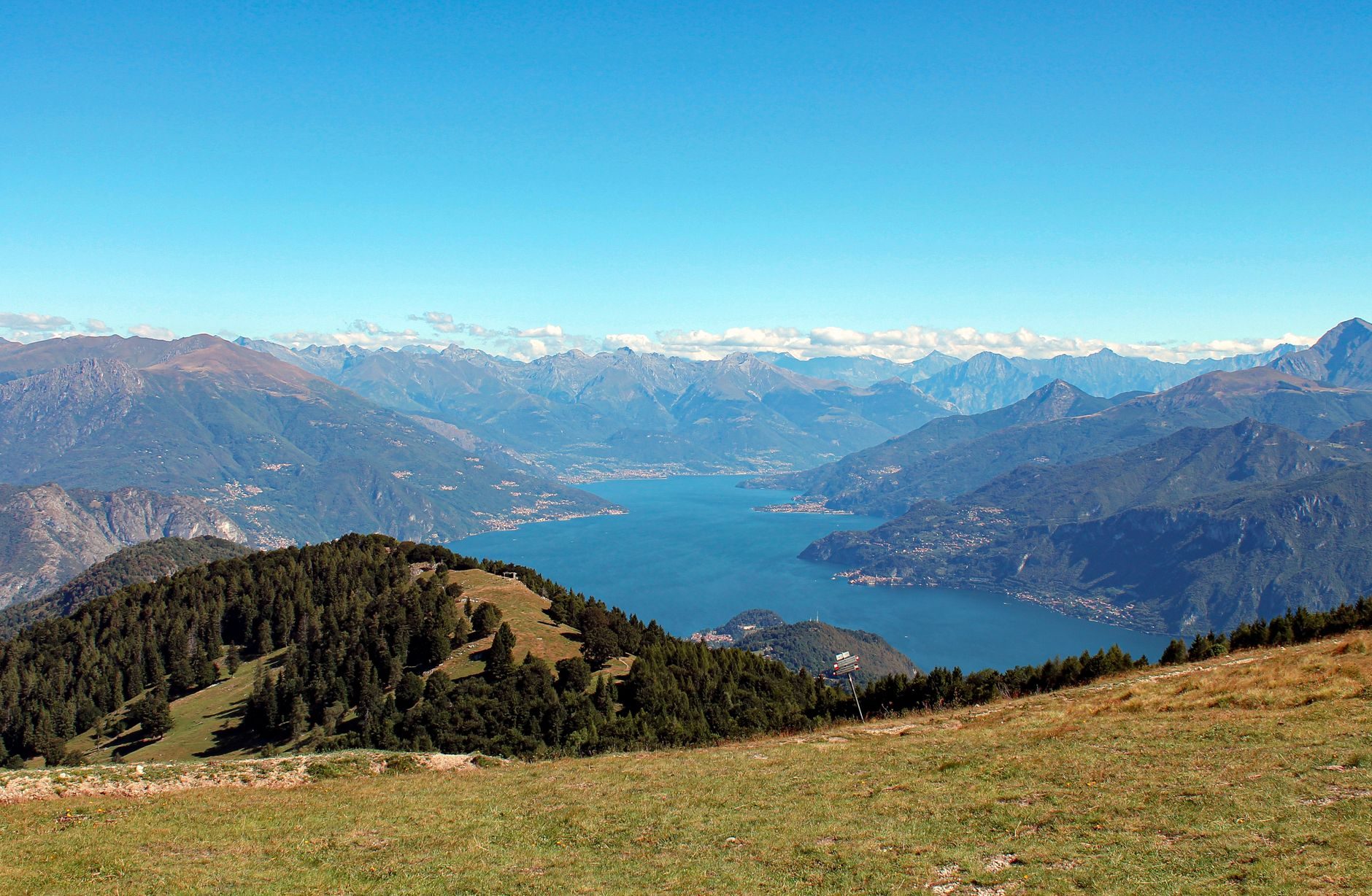
Bellagio is made of a compact old town on the tip of the promontory and hamlets scattered between the lake and the mountain, and it is better seen on foot. The Bellagio Lake Como tourist office offers three routes, each with a printed and downloadable sheet; here we join two of them, the old town and the lakeside hamlets, into one day, linking them to the pages of the places you meet. The walk starts and ends at Piazza Mazzini, in front of the boat landing.
The two routes in brief
| Route | Walking time (tourist office) | Main points |
|---|---|---|
| The historic old town | about 1 hour | Punta Spartivento, San Giacomo, San Giorgio, Villa Melzi gardens |
| The lakeside hamlets | about 2 hours, plus 30-60 minutes for the museum | Pescallo, Oliverio, Regatola, San Giovanni, Loppia, Villa Melzi |
The old-town route is better done in the morning, because the park of Villa Serbelloni can only be visited with a guide, at 11 or 3.30; the lakeside hamlets fill the afternoon. The ground is uneven and the stones of the alleys are slippery: comfortable shoes are needed.
The old town: from Piazza Mazzini to Punta Spartivento and San Giacomo
From the landing you walk under the arcades of Piazza Mazzini, enlarged in the eighteenth century for the market held on the shore. At the end, in front of pier 1, a dark stone column marks the level the lake reached in the floods of 1829 and 1868. From here you climb. At the first bend you see the entrance of the Grand Hotel Villa Serbelloni, built in 1852 as a private villa for the Frizzoni family and a hotel since 1873.
Before reaching the top it is worth turning left as far as Punta Spartivento, the tip of the promontory, where the lake divides into three branches: the Lecco branch on the right, the Como branch on the left and the northern part in the middle. For the tourist office it is one of the finest views on the lake.
Back on your steps you reach piazza della Chiesa, where stands the basilica of San Giacomo, Romanesque-Lombard, from the end of the eleventh or the beginning of the twelfth century and a national monument since 1904. According to the most reliable opinion reported by the tourist office, the bell tower comes from a defensive tower of the old town that predates the church, raised in the eighteenth century. On the wall of the Bar Sport, once a monastery, a plaque recalls Teresio Olivelli, a gold medallist for military valour, born in this house and beatified in 2018.
The park of Villa Serbelloni and San Giorgio
From the square you can see, at the top of the promontory, a small part of Villa Serbelloni, owned since 1959 by the Rockefeller Foundation, which uses it as a study and conference centre. The park is visited only on a guided tour: it leaves from the office in the medieval tower at the corner of the square, the only remnant of the old town’s defences, where tickets are also sold. For hours and prices see its page: the office speaks of tours at 11 and 3.30, from mid-March to early November, except Monday (undated information).
You climb back along via Garibaldi, the heart of the old town, and on the right you meet the Salita Serbelloni, which the people of Bellagio call «il Fossato» because the defensive ditch of the old town ran there. A little further on, next to the Town Hall, stands the small church of San Giorgio, of the eleventh-twelfth century, with its bell tower straddling the Salita Genazzini. The old-town tour continues in the municipal park, in front of the neo-Gothic Villa Gotica, once an Anglican church, and on the lakefront, where the Kennedy Memorial, by Attilio Terragni, recalls the American president’s visit in 1963. At the end is one of the entrances to the Villa Melzi gardens. On the way back, on the wall of the Hotel Splendide, a plaque recalls the death in Bellagio, in 1944, of Filippo Tommaso Marinetti; at the Salita Serbelloni another celebrates Franz Liszt, who spent a few months there in 1837.
The lakeside hamlets: Pescallo, Oliverio and Regatola
For the second route you climb from the pier by the Salita Mella, once called «via dei Fiori» (flower street), and follow via Garibaldi to the Town Hall. Opposite San Giorgio a flight of steps goes down to Pescallo, an ancient fishing village which in the early eighteenth century was, for the quantity of fish, one of the three places on Lake Como supplying the Como market. From here you look at the Lecco branch, with the Grigna in the background; in the second small square is the little church of Santi Biagio e Andrea.
Then you climb to Oliverio, named for the olive trees grown here, and see Villa Giulia, neoclassical, which is not visited. The tourist office traces it back to a seventeenth-century villa of Eudemio Camuzio, renewed by Count Pietro Venini in the late eighteenth century and named after his wife. The Vialone, the lawn in front of the villa, lets you look at both branches of the lake. At Regatola, a plaque on the first house you pass on the left recalls the stays of Alessandro Volta, discussed in the itinerary Volta’s Como, and of the poet Giuseppe Parini.
San Giovanni and Loppia
At Guggiate, in front of the Hotel Silvio, you look at the lake framed by cypresses; on the hill is the mausoleum Balzaretto built for Giacomo Poldi Pezzoli, in the private park of Villa Gerli. Then you cross the Perlo and arrive at San Giovanni, where a tower-house with a sundial houses the Museo degli strumenti per la navigazione, Gianni Gini’s collection of more than two hundred instruments: the visit lasts from half an hour to an hour. Close by is the church of San Giovanni, which keeps an altarpiece by Gaudenzio Ferrari, and on the water you see the «lucie», the typical boats of the lake.
The last hamlet is Loppia, another fishing village. The Romanesque church of Santa Maria di Loppia, from the end of the tenth century, stands in the park of Villa Gerli and is seen from outside. From here the office suggests going back through the gardens of Villa Melzi: the ticket is valid all day and includes the chapel and the museum. Alternatively you walk along the road, on the Lungo Lario Europa lakefront, and in a few minutes you are back in the centre.
Practical information
- The times are the tourist office’s: about 1 hour for the old town, about 2 hours for the lakeside hamlets, plus 30-60 minutes for the museum. The two routes are printed sheets that can also be downloaded from the office’s website.
- Bellagio Lake Como office, piazza della Chiesa 14 (+39 031 951555): the visit of the Villa Serbelloni park leaves from here.
- Hours and prices for Villa Serbelloni, Villa Melzi and the Museo degli strumenti are on their pages and in the guide Lake Como Villas to Visit in 2026; Villa Giulia and Santa Maria di Loppia are not visited.
- To reach Bellagio by boat see the guide Getting to Lake Como.
Sources
- Bellagio Lake Como, Itinerario storico della frazione di Borgo (PDF) and the route page
- Bellagio Lake Como, Walk around the hamlets on the lakeside of Bellagio (PDF, 2022) and the route page
- Bellagio Lake Como, Tour of the hamlets on the eastern side of Bellagio (PDF)
- The pages of the individual places on this site, with their own sources.